Naturalist Notes: Reading the Stories in the Snow
Michigan winters do more than cover the ground—they open a window into a hidden world. Fresh snow reveals nature’s secrets, turning forests, fields, and even backyards into storybooks. Animals we rarely see suddenly sign their names across the landscape. From tiny handprints under shrubs to long, bounding trails across open fields, every set of tracks tells a story. All we have to do is learn how to read winter’s clues.
The first step when you discover tracks in the snow is to start asking questions. Which direction was the animal traveling? How many different animals were here? Was it moving slowly or in a hurry? Did it stop to feed or investigate something along the way? The more questions you ask, the more details begin to emerge. One of the best ways to start answering these questions is by identifying how the animal moves.
Most animals fall into one of four common movement patterns: walkers or trotters, waddlers, hoppers, and bounders.
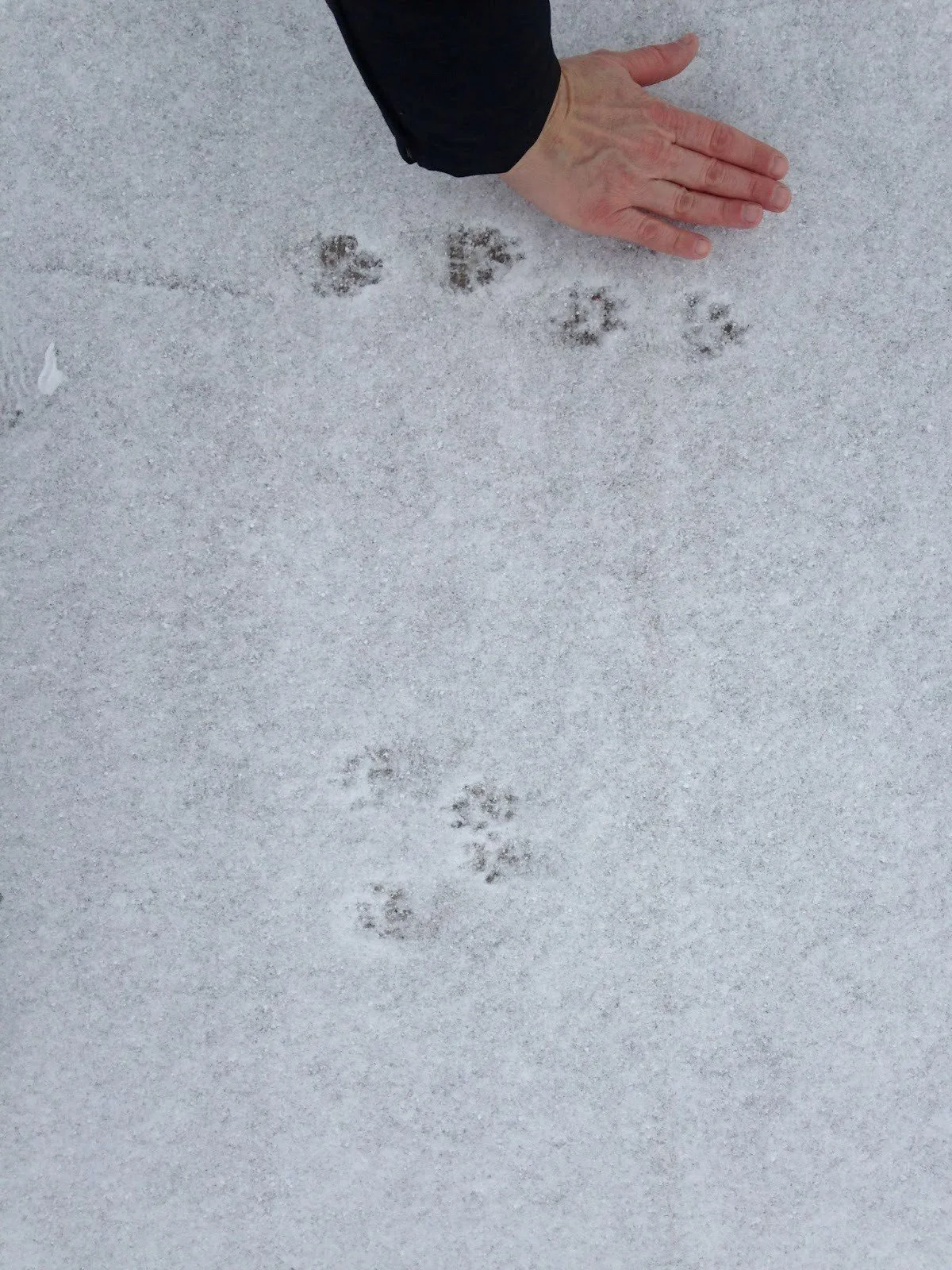
Walkers and trotters include animals like cats, dogs, foxes, and coyotes. These animals move one front foot and the opposite back foot at the same time. Often, the back foot lands directly in the front foot’s print, creating a neat, straight line of tracks. Tip: If you think you’re looking at fox or coyote tracks, follow the trail for a bit. Wild animals tend to travel with purpose in a straight line, while domestic dogs are more likely to wander, zigzag, and explore.
Waddlers move both their front and back legs on the same side of their body at the same time. Black bears are a classic example. Their tracks usually show both the smaller front foot and the larger hind foot side by side, giving their trail a rolling, side-to-side appearance.
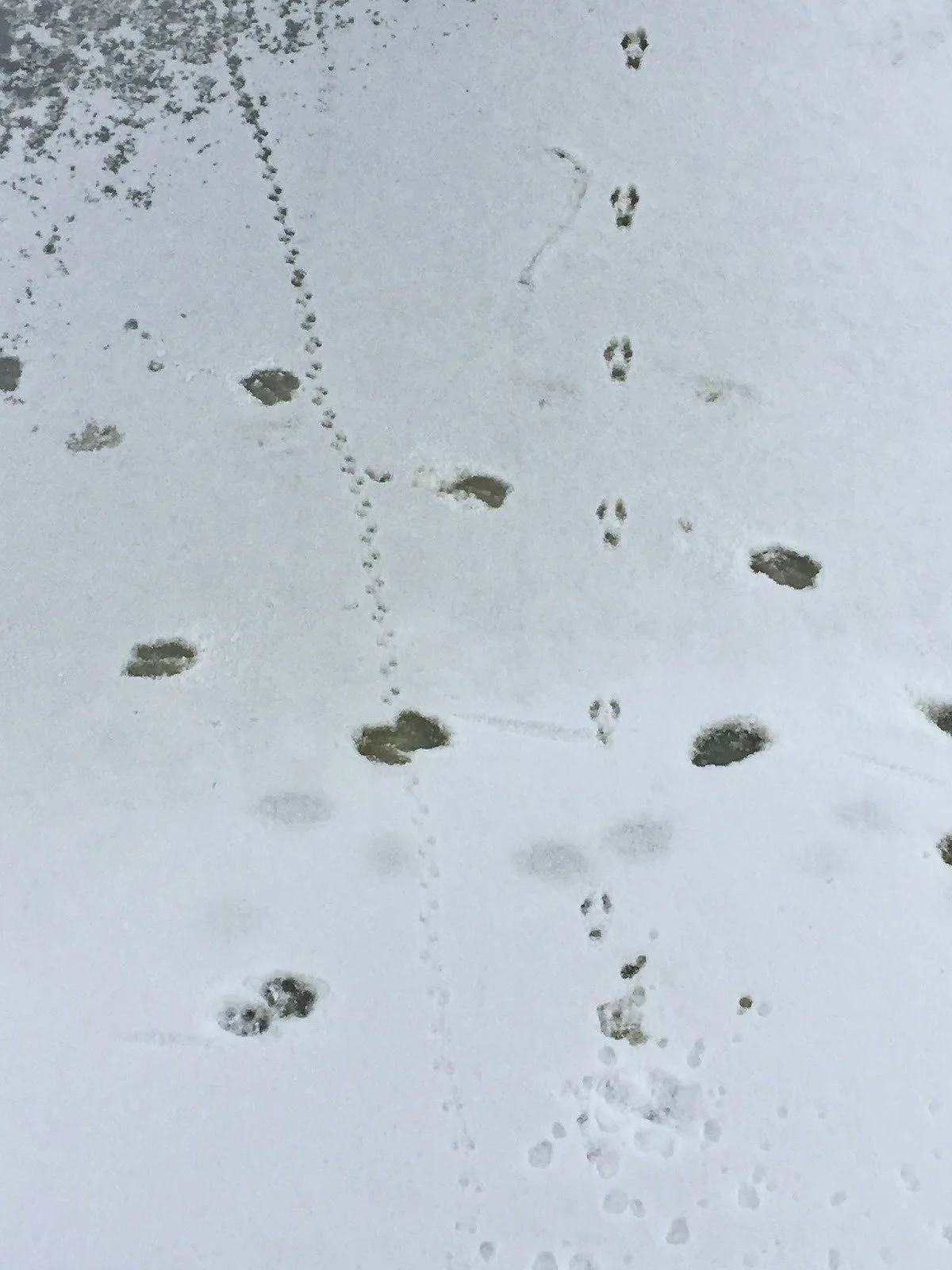
Hoppers are easy to recognize once you know what to look for. Rabbits and squirrels belong to this group. These animals push off with their powerful hind legs, land on their front feet, and then swing their hind feet forward, past the front prints. The result is a familiar pattern with two small prints behind and two larger prints in front.
Bounders, like members of the weasel family, move in a springy, energetic way. They leap forward with their hind feet, stretch their bodies midair like an accordion, and land with one or both front feet before the hind feet catch up. Because of this motion, you often only see the hind footprints clearly in the snow.
Once you’ve identified the movement pattern, take a closer look at the size of the tracks and the habitat where you found them. A small bounding trail near water tells a different story than one crossing an open field. These details help narrow down which animal you’re reading about and what it was doing at that moment in time.
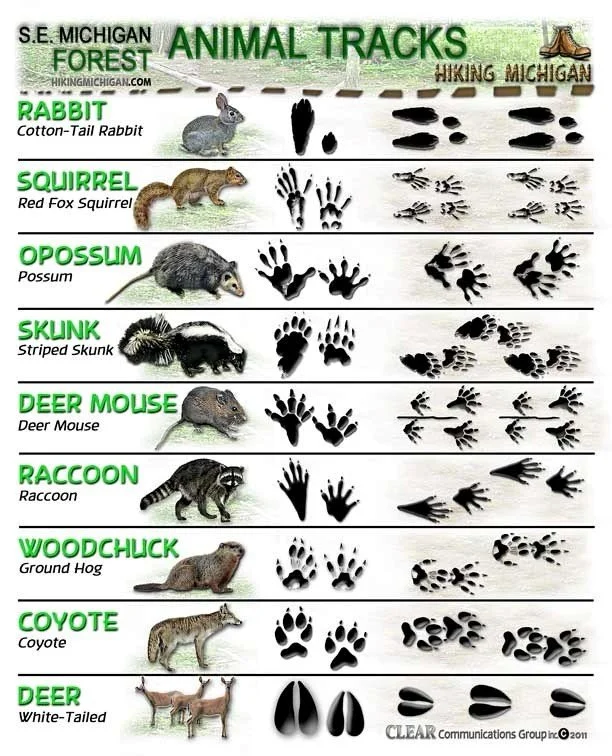
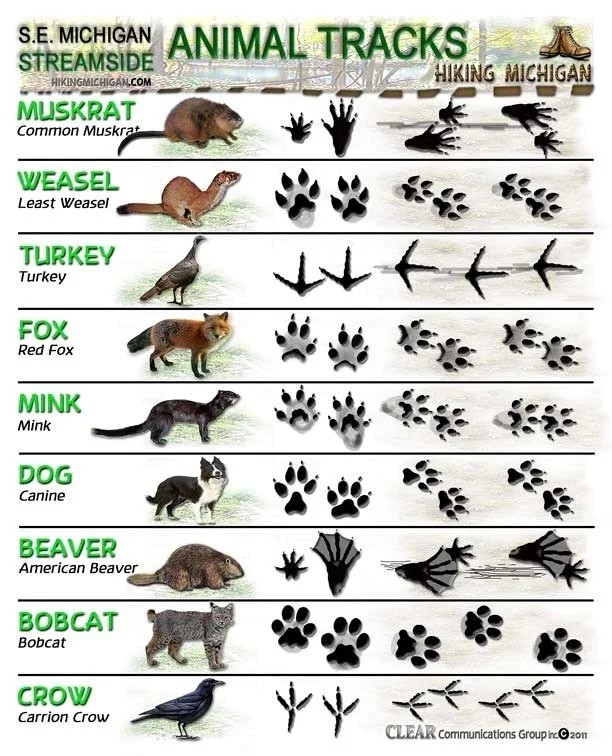
In winter, you don’t need binoculars or luck to observe wildlife. All you need is a fresh snowfall, a curious mind, and a willingness to follow the story written at your feet. So next time you head outside after a snowstorm, slow down, look down, and see whose path crossed yours. Here’s a nice printable track field guide with some common Michigan animals.