
Naturalist Notes: Wings Over Michigan - The Great Spring Migration
Written by: Cathy Molitor, naturalist
Each May, the skies above Michigan become invisible highways filled with travelers. While we go about our daily routines, millions of birds are on the move, some leaving us after being winter visitors, others arriving for summer, and some just passing through to go far beyond us. Its spring migration time!
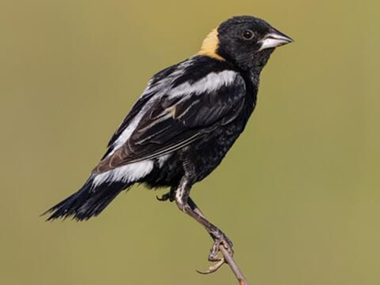
Bobolink
Bird migration is the seasonal movement of birds from one place to another, usually in search of food, better weather, and safe places to raise their young. In Michigan, many birds head south in the fall to find warmer conditions and more reliable food sources, then return north in the spring when insects, plants, and nesting habitats become abundant again. Migration can range from just a short trip within the region to journeys spanning thousands of miles across continents and even oceans. It’s one of nature’s most impressive survival strategies, guided by instinct, weather patterns, and changing daylight.
Michigan’s marathon migrator is the Bobolink. These grassland birds spend their winters in South America, in places like Argentina and Bolivia, before making an incredible journey back north each spring. That’s a round-trip of nearly 12,000 miles each year!
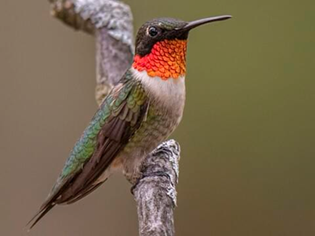
Ruby-throated Hummingbird
For another jaw-dropping migration, consider the Ruby-throated Hummingbird. Though not quite as long-distance as the Bobolink, their journey may be even more astonishing. Despite weighing about as much as a penny, many fly nonstop across the Gulf of Mexico, hundreds of miles over open water to return to Michigan each spring.
On the other end of the spectrum are short-distance migrants like the American Robin. While some robins stay put all winter, others only travel a short distance south, sometimes just to southern Michigan or nearby states, returning as soon as conditions improve.
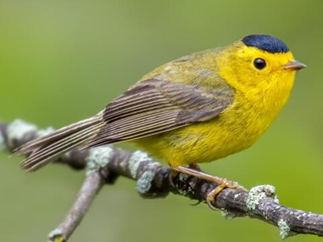
Wilson’s Warbler
Migration in Michigan isn’t just for the birds that are coming back, but also for the ones that will leave us until next winter, birds like the Dark-eyed Junco. These familiar winter visitors head north to Canada before summer arrives. Another is the American Tree Sparrow. These small, rusty-capped sparrows are common in winter fields and feeders, but once spring arrives, they migrate to the Arctic tundra where they nest during the short northern summer.
Then there are the “just passing through” travelers. Birds like the White-crowned Sparrow may stop in Michigan briefly to rest and refuel before continuing farther north. Wilson’s Warbler is another fly through bird. These little birds are easy to miss because they’re small, fast, and constantly moving, but the males are hard to forget with their bright yellow bodies and distinctive little black “skullcap.”
Migration is not without its dangers. One of the biggest threats birds face is collisions with windows and buildings, especially during nighttime flights. Bright lights can disorient them, drawing them off course. Habitat loss along migration routes also makes it harder for birds to find the food and shelter they need to complete their journeys. Outdoor cats are also a major threat to migrating birds.
You can help these travelers by turning off unnecessary outdoor lights at night, keeping feeders clean and stocked, making windows more visible to birds with stickers, and keeping cats indoors. All these little things can make a real difference.
So the next time you step outside in May, take a moment to notice what’s happening overhead and in the trees. The birds you see may have just arrived from thousands of miles away, or they may only be pausing for a day before continuing an even longer journey. Spring migration is a reminder that Michigan is part of something much bigger, connecting continents, seasons, and countless living things through the simple act of movement.
Pictures: All pictures are from https://www.allaboutbirds.org/