
Michigan History: Michigan’s Missing Pages
Written by: Seth Bivens, naturalist
For any fan of paleontology, you probably know where a few famous fossils were found. Colorado has stegosaurus, South Dakota has triceratops, and Kansas has pteranodon. Michigan has mammoths and mastodons, but we also have petoskey stones from 350 million years ago. That leaves us with a big gap and a lingering question. Where are the dinosaur fossils in Michigan?
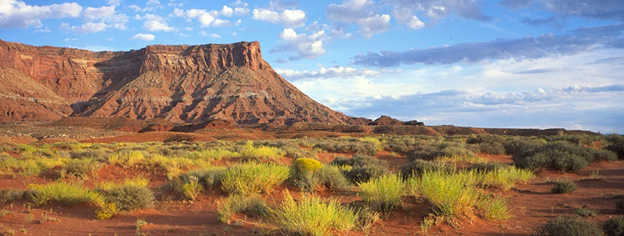
To answer that, we need to look at Michigan, before dinosaurs ever walked the Earth. 298 million years ago, during what is known as the Permian period, Earth was going through some big changes. The supercontinent, Pangea was forming, and as all the continents were colliding together, the sea level was lowering. The shallow ocean which had once been Michigan, was no more. Now, the area that would eventually become our state, was a dry, elevated desert constantly exposed to wind erosion.
All those conditions combined made it impossible for fossils to be preserved during this time, as there wasn’t anything to quickly bury them or protect them from environmental forces. Michigan would stay this way throughout the Triassic, Jurassic, and Cretaceous, better known as the age of dinosaurs. This also extended to rocks in general, and it is very hard to find any rocks from this time period. We can only make educated guesses as to what Michigan was like by looking at the finds we can find in surrounding areas, but this isn’t always perfect.
We wouldn’t see a large quantity of fossils again until 17,000 years ago when the last glaciers started to melt away, and the Great Lakes were formed and rivers became wide spread. Low land rivers are ideal fossil preserving environments, because they can quickly bury organic remnants and protect them from constant erosion. Next time you visit the nature center, try to ask your self if anything here will be preserved 10,000 years from now.