
Michigan History: Jurassic period
Written by: Seth Bivins, naturalist at JNC
Last article, we tried to theorize what Triassic Michigan was like. We can only guess as Michigan, at the time, wasn’t suitable for fossilising animal remains as the rocks were constantly exposed to wind and water erosion, and there weren’t any nearby rivers or seas to bury dead animals to preserve them. The best we can do is look at the stones found in Michigan during that time period, estimate the environment, and examine animals from neighboring areas that could have crossed over. While this isn’t a perfect method, we hope it tickles your interest in paleontology.
This article attempts to build a picture of Jurassic Michigan. The Jurassic period started 201 million years ago and ended 145 million years ago. Dinosaurs dominated this era, with some of the largest evolving during this time. North America was home to many famous Jurassic dinosaurs such as Allosaurus, Brachiosaurus, and Stegosaurus. However, none of them were close to Michigan.
Most of the world during the Jurassic was humid and hot. However, as the continents had broken up and there was plenty of rainfall, most of the world wasn’t a big desert like during the Jurassic. While Michigan doesn’t have animal fossils, we have found planet spores, which informs us that something was growing here. It also isn’t a stretch of the imagination to believe that where there are plants, there are animals there to eat the plants. During the Jurassic, Michigan was home to gymnosperm plants. Gymnosperms are a group of plants that don’t have a protective shell over their seeds like modern day flowering plants. Gymnosperms are still alive today and include conifers, cycads, and ginkgos.
Now for the tricky part. The states and counties around Michigan suffered the same fate. Ontario, Ohio, Wisconsin, Indiana, Minnesota and Illinois all shared the same environment … which means no fossils. To this amateur paleontologist's shock, the United States of America only has a handful of Jurassic period dig sites. Remember Stegosaurus and those other famous dinosaurs I mentioned earlier? All of them, and most USA fossils are found in the Morrison Formation which stretches through most of the western states.
Dig sites are called Formations by paleontologists and geologists. By examining the rock types and fossils, these scientists are able to learn how old these rocks were and what the environment was in the past.
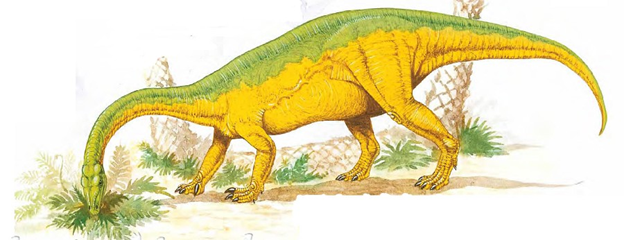
Once again, Pennsylvania is the closest location to Michigan that has fossils, but even then it is not as diverse or famous as the Morrison Formation. Most notable is a very early sauropod (the big, long necked dinosaurs) called Anchisauripus, whose footprints we have found in Gettysburg National Military Park, Pennsylvania.
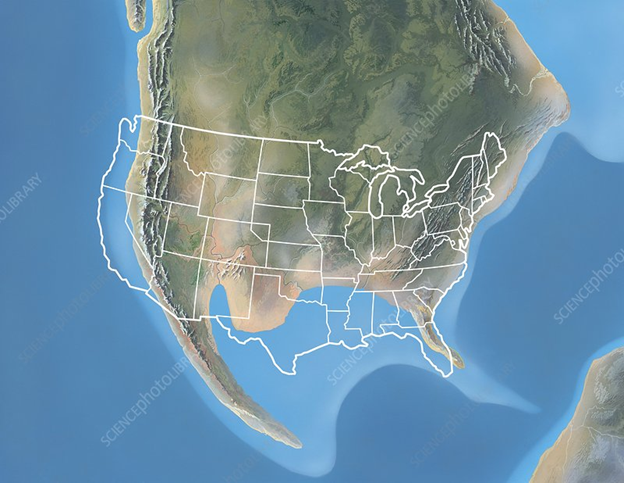
Due to the fact dinosaurs and pterosaurs are found world wide, it is almost certain that both lived in Michigan, but these species have been lost to time. There is, however, another important group of animals that were growing during the Jurassic. Mammals that give birth to live young, and don’t carry them in pouches like kangaroos, are called placental mammals.