
Creature Feature: Unique Encounters at JNC
Written by: Zachary Mork, naturalist at JNC
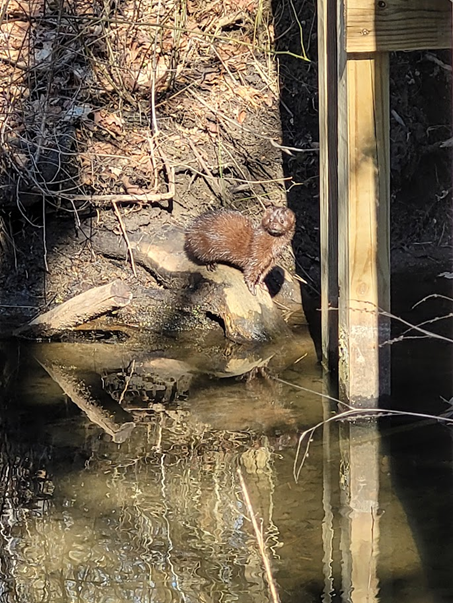
American mink
As the school year comes to a close, some of the most effective ways of making the most out of the summer season is by going out on a hike to explore nature. Johnson Nature Center is an excellent choice for outdoor enthusiasts because it serves as a hub for many different plant and animal species. Some of these species are unique in that they are not often seen by the everyday visitor, thus making their appearance all the more special. In this edition of Creature Feature, we shall be revealing a few of these elusive species that have called the JNC their home.
American Mink (Neogale vison)
Our first feature is a semiaquatic mammal that is related to weasels and otters. Mink are carnivores that hunt rodents, fish, frogs, crustaceans, and more along coasts, rivers, and estuaries. Usually, they traverse the land silently, only making noise when they come across another MInk, or a potential predator. If threatened, a mink has the ability to spray an odor to deter predators. The spray may not be as extensive as say, a skunk, but some reports have suggested that the smell is more foul. Like all members of the weasel family, mink do not hibernate. They either create dens near a water source, or they find an abandoned den previously made by another creature, such as a muskrat or a badger. Mating season is dependent on the climate that they live in, with southern individuals breeding in mid-winter and northern individuals breeding in the mid-spring.
Wood Duck (Aix sponsa)
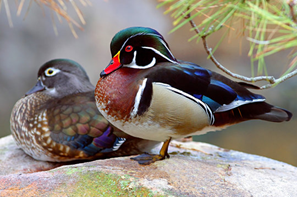
Female (left) and male (right) wood duck
Our next creature is a species of bird that may be shy around humans, but when seen shows off beautiful colors. Wood ducks nest in wooded swamps and other wetlands that contain trees and woody vegetation. They are one of the only ducks that choose to nest and perch in trees, which is why wood is a key aspect to their ideal habitat as well as being a part of their name. If no tree cavity is available, they may settle for a nest box so long as it meets their needs. When eggs hatch into ducklings, the ducklings will need to leave the nest the following day. In some cases, the height may be as high as fifty feet. By landing on either water or leaf litter, the ducklings survive the impact and can then immediately follow their mother to the water source. When it comes to feeding, these ducks are considered ‘dabblers’. Dabbling ducks feed on what's found on the water's surface, as opposed to diving down underwater. As of March of 2026, the wood duck is the state duck of Michigan!
Fishfly (Corydalidae Family)
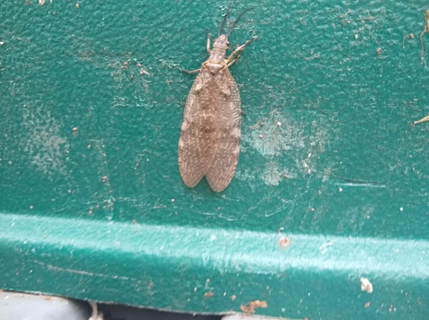
Fishfly species
Our last example of Creature Feature is an insect that looks like it came from the tropics, but is very much a Michigan native! The fishfly has some similarities to another insect, the dobsonfly, but fishflies do not have prominent mandibles, and the males have antennae similar to that of moths. The lifecycle of a fishfly begins as an egg that rests on vegetation above a steam. When the egg hatches, the larvae then falls into the stream and begins to prey on other small aquatic invertebrates for food. After the larval stage comes their next life stage, known as a pupae or pupal stage, where they leave the water and hide under rock or wood until they are able to finish their transformation into an adult. Adults are quite large for a North American insect, averaging a wingspan of roughly three inches. Although this insect may live for a for years, most of that time is spent as an underwater larva, while the adults live for about a week until they reach the end of their life cycle. The short lifespan of an adult is what makes finding this insect at the Johnson Nature Center a cool feat.